

By LeeAnn O’Neill
First published in the September, 2025 Homesteader
September 15th marks the beginning of Hispanic and Latino Heritage Month, which invites us to explore and honor the diversity of cultures, stories, and contributions of our local Hispanic and Latine[1] community. This date commemorates the Cry of Dolores and the start of the Mexican War of Independence that paved the way for independence for what is now Mexico, Guatemala, El Salvador, Costa Rica, Honduras, and Nicaragua.
As a part of the St. Charles Belonging Grant research, I was drawn to a single article in Kelly’s infamous folder of “research threads.” As I dug into an article that referenced Bracero workers in Redmond, I realized that the Redmond Bracero camp was a part of our potato farming history that had virtually been erased. And so, we set out to partner with the Latino Community Association (LCA) and the Deschutes Public Library (DPL) to search for these stories. We reached out to all of LCA’s connections and our personal networks, did a call for stories on Radio La Branca, and put fliers up at the Mexican grocery stores in Bend, Redmond, and Madras.
At the museum, I researched as much as possible to support our joint celebration of Bracero Program Day on August 4th, which is an official Oregon holiday. We learned that Braceros were valued members of the Redmond agricultural community and that women from the tri-county faith organizations came together to support and advocate for them through the migrant ministry. We also learned that they experienced violence and discrimination, with one salient incident in 1960 where two white boys — Carl and Charles Johnson (ages 19 and 17) — attacked and injured Roberto Veliz (age 18) with a rock and belt buckle so badly he was hospitalized. The attack led to a near-riot at the Redmond camp. Although the case settled out of court, the Redmond Spokesman highlighted Judge Copenhaver’s sentiments that this was “an offense against the City of Redmond, that the city statutes were for the protection of migrants as well as for local citizens, and while living here all have equal rights, privileges and obligations. He noted that the migrants were welcome in Redmond and that they were important to the economy of the area at harvest time.”
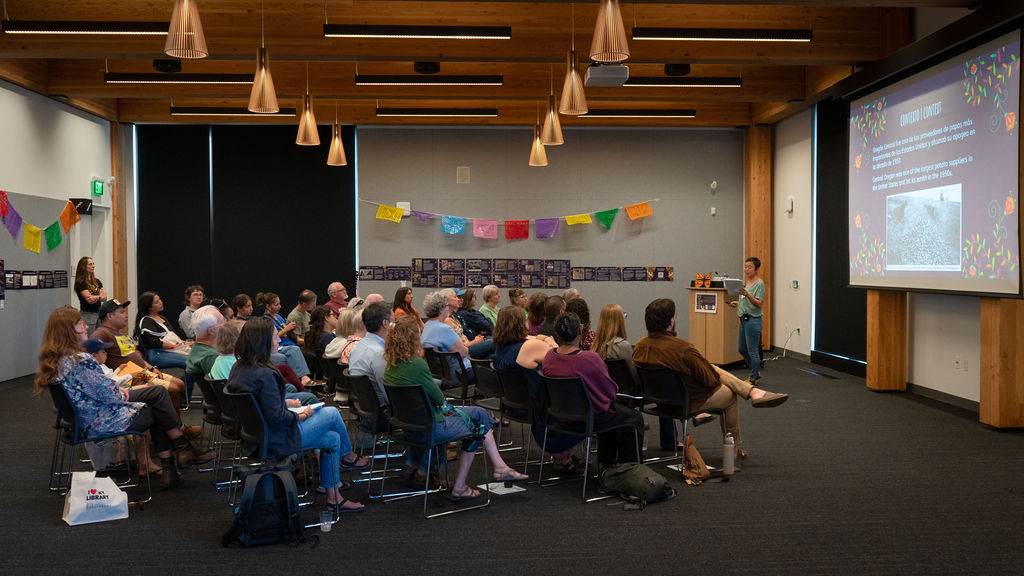
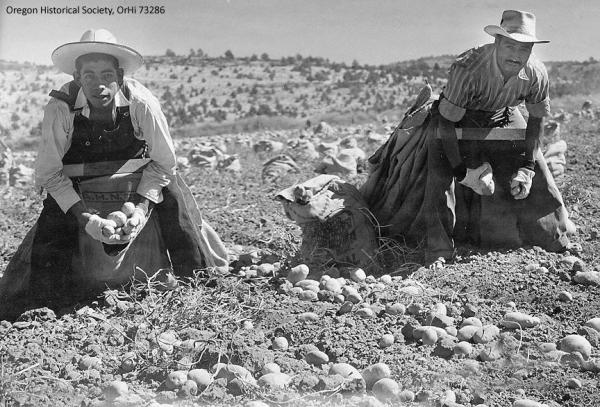
The Mexican families who labored in Central Oregon potato fields 1943 through the 1960s would be amazed to see an exhibit (available here) and celebration of their hard work. At least 50 people attended a tribute to the Braceros who lived and worked out of a labor camp in Redmond at the Redmond Library. Participants included current and prospective County Commissioners, Redmond City Council members, descendants of Braceros, community members, and dedicated members of the DCHS.

And what came from our call for Redmond camp Bracero stories? While we did find one community member who lived in the Redmond camp towards the end of its time, we have not yet been successful in supporting them to share their story. We also identified several community members who came to the U.S. as Braceros and now live in Central Oregon, but were in other Bracero camps and we are in the process of reaching out to record their oral histories.
One of those folks is Nabor Vazquez Castañeda, who is now 102 years old. We were able to do an oral history with him through his daughter Lidia Vazquez. Nabor was a Bracero during WWII and harvested strawberries in Centralia, Washington and grapes, lettuce, oranges, and almonds in California. He is originally from Guadalajara and came with two of his older brothers and two cousins when he was 16 years old. He experienced a lot of discrimination when he came as a Bracero, recalling trying to go out to eat on a day off, but no one would serve him because he was Mexican. He was a Bracero until he was 20 years old, and then stayed in Mexico.
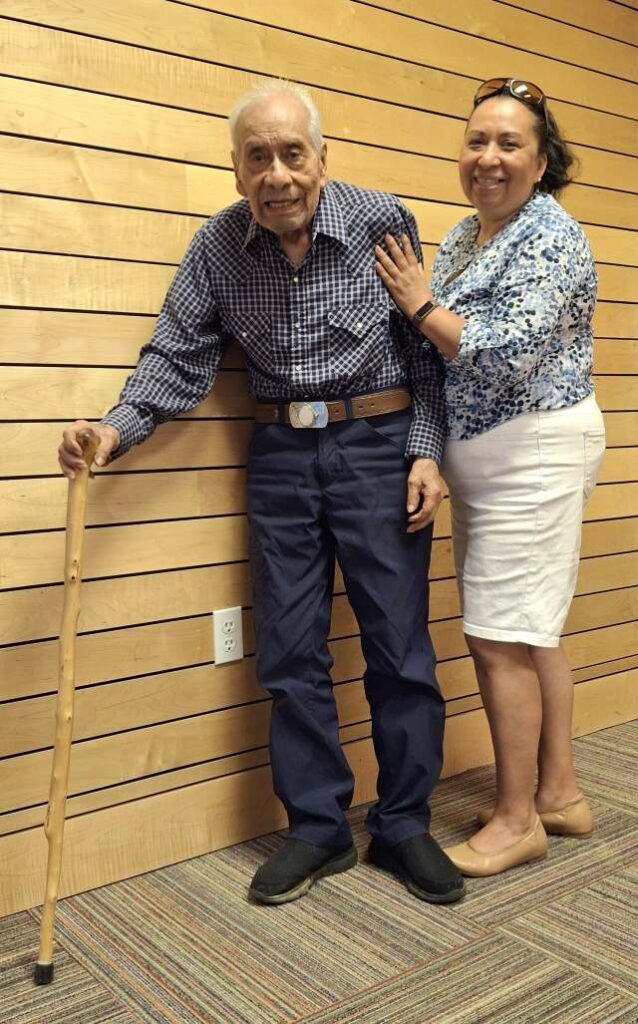
It wasn’t until the late 1980s that he moved to the U.S. for good, at first to California and then to Idaho. There, he met a chef who really liked him and that chef brought him to work in Sunriver in 1993. His experience moving to Central Oregon was initially hard because of the language barrier and not having a place to live, but the chef helped him find a house and he was able to bring his family a few years later. In those early days, he did not experience the same kind of discrimination that he did when he first came as a Bracero, and shared that people were very good to him.
Our hope though Hispanic Heritage Month is to keep recording oral histories of local Braceros and/or descendants of Braceros and to support efforts in the works for Historic Preservation Month next year to memorialize the contributions of both Warm Springs community members and Braceros to the prosperity of the Redmond agricultural community both past and present.
LeeAnn is the principal of Allyship in Action and a Latino Community Association board member.
[1] For more on identity terms, check out Latino, Hispanic, Latinx, Chicano: The History Behind the Terms, History.com (last updated January 31, 2025) and A Brief Explainer on Latine and Latinx, Hispanic Executive (June 5, 2023). I will use the term Latine for the sake of brevity and inclusion in this article.