
How a 1920s Crisis Shaped a Public Water System
Bend’s water system didn’t become a cornerstone of the City by accident. It became one through a deliberate shift from private ownership to public stewardship 100 years ago. Over decades since, the community built a dual source network designed for reliability, resilience and the shared responsibility of managing a vital resource.
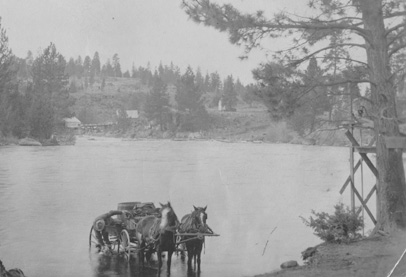
Up until 1926, the water supply for the burgeoning community of Bend came directly from the Deschutes River via ditches or vessels filled on the riverbank and conveyed to residents. Early histories document water delivery by horse-drawn wagon for 25 cents per barrel. Lace Reed, Barney Lewis and Lucky Baldwin were all involved in such an enterprise.
In 1905, the Bend Water, Light & Power Company and John Steidl built and extended a pipe system to supply residents with water for domestic purposes and fire protection. The company — the same one that built the dam that created Mirror Pond and supplied Bend with electricity — operated the water system as a private utility for nearly 20 years.
The big ‘stink’
But in the early 1920s, the residents of Bend discovered that the lifeblood of their High Desert community had curdled — the water flowing from the Deschutes River had become a literal “stink,” according to newspapers at the time.
In 1922, dams were built at Crane Prairie and at Crescent Lake in the Upper Deschutes. The resulting reservoirs flooded many thousands of acres of wooded and meadow land. Under the hot summer sun, the Upper Deschutes became a breeding ground for massive algae blooms, which tainted the water all the way to Bend with an unpleasant taste and smell.
After an investigation by the State Board of Health, the Deschutes River water was condemned, according to a 1924 civil engineer’s report.
The impact on public trust was visceral. Many residents started making daily trips west of town on Shevlin Park Road to a well that produced pure water, longtime water system superintendent Percy Drost told a Bend Bulletin reporter in 1972. Drost recalled a constant “cloud of dust” on the road as citizens hauled milk cans, jars and buckets in a desperate pilgrimage for drinkable water.
Bend Water, Light and Power Company, attempted to manage the crisis with a $100,000 filtering plant, but the odor remained.
1924 Election
The water crisis ignited a fierce media war in Bend over a singular issue: Should the City of Bend buy the water system and take over its management with a new water source?
On one side stood Robert W. Sawyer, the editor of The Bulletin. Sawyer’s position was ethically fraught; he was simultaneously a director of Bend Water, Light & Power, the company he was supposed to be covering. The Bulletin ran “smaller, less conspicuous” reports on the water quality issues, attempting to downplay the crisis to protect the company’s private interests, The Bulletin reported nearly 50 years later.
Meanwhile the rival Central Oregon Press championed municipal ownership, launching an aggressive campaign that labeled Sawyer’s obfuscation as “clear as mud,” historical reports show. This wasn’t just a disagreement over pipes; it was a battle over whether a vital resource should be a private profit center or a public right.
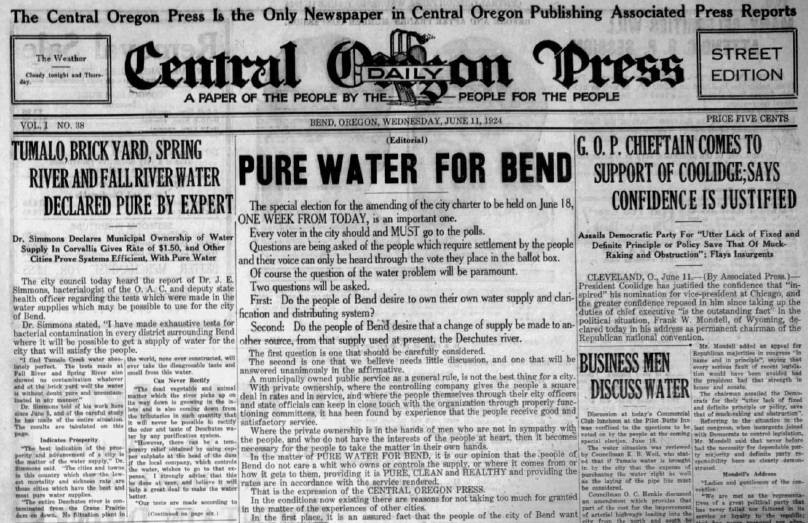
The tension culminated in the landmark election of June 18, 1924. The results revealed a public that had reached its limit. Four-fifths of the town’s voters turned out, delivering an overwhelming mandate for change. The proposition for the City to purchase the system passed 1,362 to 172, while the proposal to change the water source saw an even more staggering margin of 1,468 to 84.
The City sought a report on alternative water sources and weighed options including Green Lakes, Fall River, Spring River and Tumalo Creek. Ultimately, Tumalo Creek’s waters were the most efficient to convey to Bend — located only 10 miles away and 1,160 feet in elevation higher than Bend, the source water could be distributed using a gravity system, which cost less than other alternatives.
Bend was officially taking its water security into its own hands.
Early Infrastructure
When the City finally took over operations in 1926, the strategic focus shifted to long-term civic sustainability. However, the system the City inherited was a crumbling, neglected patchwork. A 1924 appraisal by Stevens & Koon Consulting Engineers revealed a staggering “regression of service.” Although the population more than doubled over the previous decade, the City was actually “better served in 1914 than in 1924.”
The financial terms were clear: $15,000 for the water rights to Tumalo Creek and $64,195 for the physical assets of the Bend Water, Light and Power Company. What the City bought was a logistical mess:
• Total infrastructure: Roughly 34 miles of pipe.
• Wire-wound wood pipe: 100,858 feet, accounting for 55.9% of the entire system
• Cheaply built expansions: Early water system expansion was heavily influenced by real estate speculation. Developers extended cheaply built, undersized water lines into new areas primarily to boost land sales, not to ensure reliable service, according to engineers. Although these lines weren’t initially part of the Water Company system, they were eventually absorbed into it, compounding infrastructure problems.
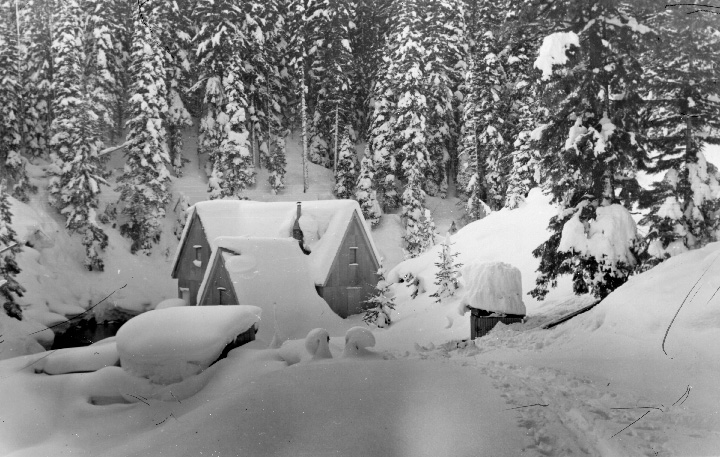
The City moved quickly to abandon the river source that had caused the 1924 “stink.” In 1926, the Bend Municipal Watershed was established, securing the pristine mountain waters of Bridge Creek, a tributary to Tumalo Creek, as the City’s future. This protected watershed is still the backbone of the City’s water services.
Evolution of the Modern System: Surface and Groundwater
Today, Bend operates a sophisticated dual-source system that balances environmental stewardship with the necessity of a backup for a growing population. But it wasn’t until 1972 that the City tapped into the Deschutes Regional Aquifer.
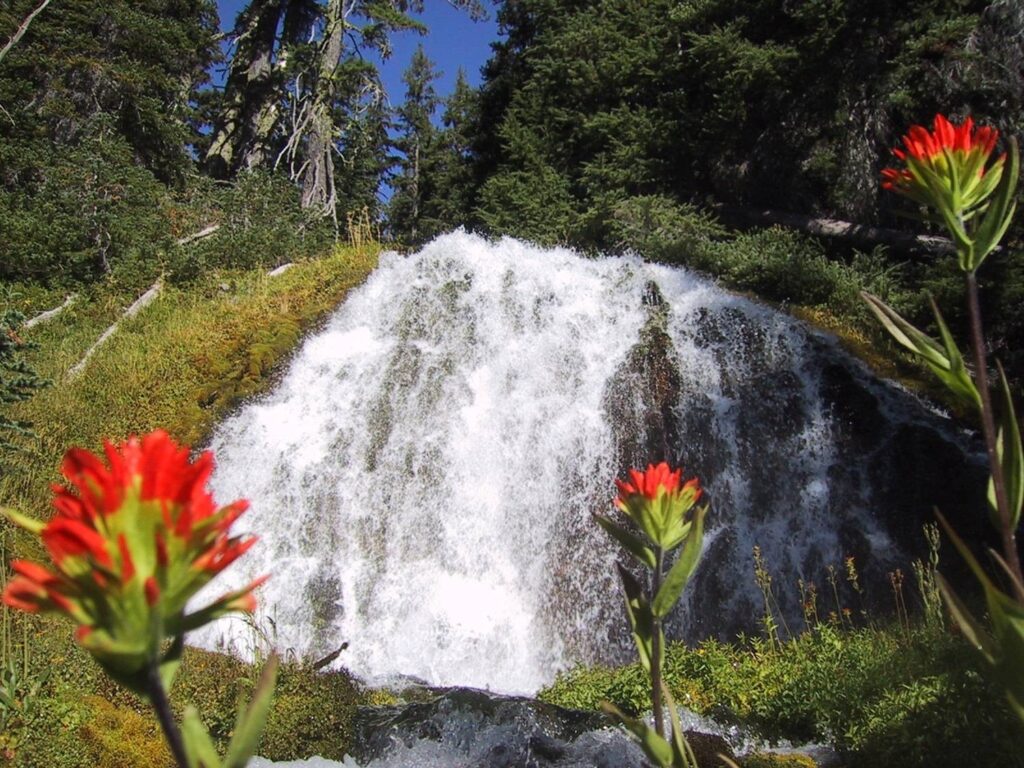
Surface water: This remains the majority of Bend’s supply, providing roughly 60% of the City’s water. This water from Prowell Springs (a previously unnamed spring renamed in 2020 in honor of longtime Bend water supervisor Roger Prowell) and Bridge Creek is prized for its gravity-fed delivery, which requires less energy than pumping groundwater, according to City staff. Modern infrastructure, such as the Heidi Lansdowne Water Intake Facility, ensures this mountain source remains the primary driver of the system.
A second pipeline was completed in 1957 to run parallel to the 1926 pipeline, increasing capacity of the water delivered to Bend. The entire 10-mile pipeline was replaced in 2014-15, when the Outback Water Filtration Facility was built, adding membrane filtration to the City’s water system for the first time to meet a federal requirement to treat water for cryptosporidium.
After filtration, the source water is disinfected with a small amount of chlorine. The groundwater supply is also disinfected using a small amount of chlorine at each of eight wellfield sites.
Groundwater (Deschutes Regional Aquifer): To meet peak summer irrigation demands and provide resilience, the City utilizes 20 wells tapping deep into the Deschutes Regional Aquifer, which supply the remaining 40 percent of water.
Bend provides water to roughly 75% of the city. Private water companies account for the rest.
The Future of Bend’s Water: Planning and Conservation
A century after the algae bloom of 1924, the challenges have shifted toward climate change, the pressures of urban growth and protecting water quality.
Despite the service area population swelling to 79,000, water conservation efforts have been remarkably successful: Gallons used per capita per day have dropped from 196 in 2013 to 161 in 2025, according to City records.
The City has a goal to reduce water use community-wide by 7.9 billion gallons by 2040 and reduce per capita water use by 17 gallons per day.
The City of Bend’s “One Water” approach looks at all parts of the water system — drinking water, wastewater, stormwater and natural waterways — as connected, rather than managing each one separately. This approach is meant to help the City plan more efficiently by coordinating projects, reducing water use where possible and protecting water sources.
Next for Bend is a series of proposed changes that aim to address capacity limits and projected growth over the coming decades. The proposed expansion of the Outback Water Filtration Facility would add a pretreatment system to address sediment, new reservoirs and groundwater wells, enhanced site security to meet federal requirements, and in‑conduit hydropower equipment to offset energy use. Plans also include a wildfire water fill station intended to support emergency response. City officials say the proposed improvements are intended to support drinking water reliability, system maintenance, and emergency preparedness over the next 20 years and beyond.